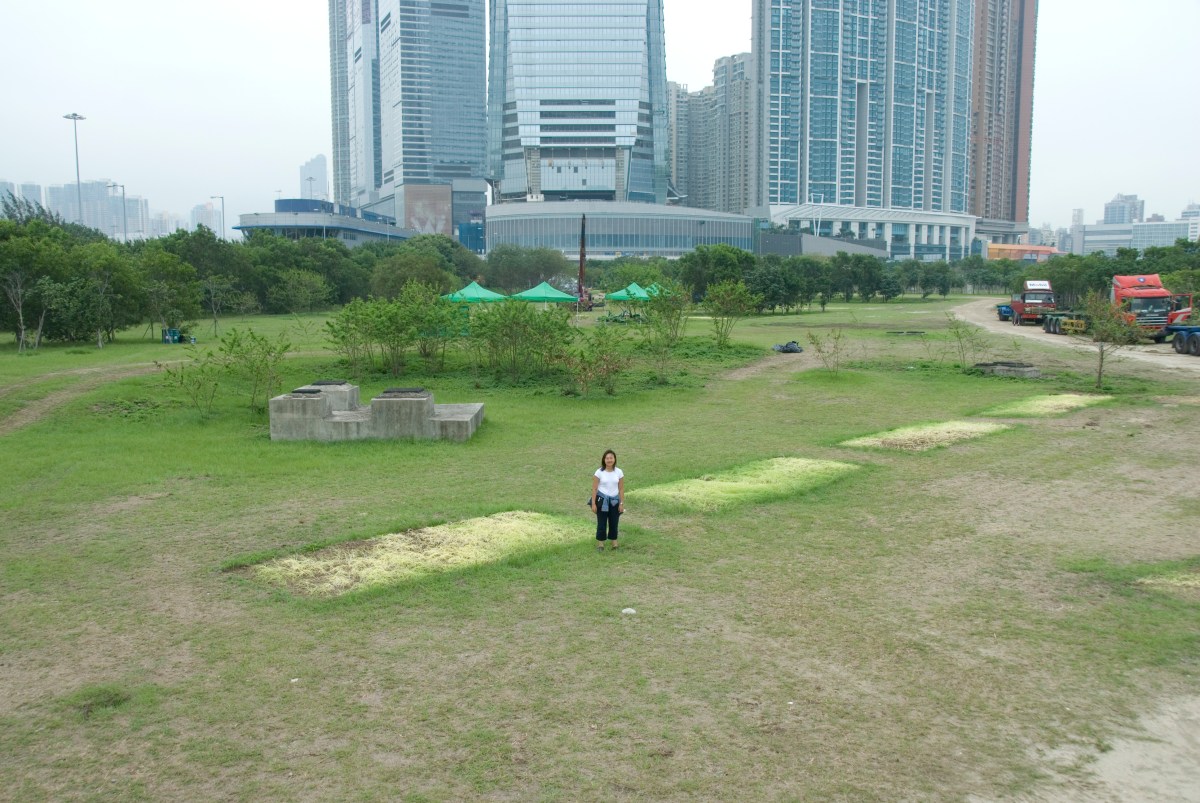
拍攝日期:二零零八年五月二十一日
拍攝地點:西九龍文化區西九龍海濱長廊側的草地上
Time: 21 May 2008
Place: West Kowloon Cultural District, next to the West Kowloon Waterfront Promenade
要寫關於藝術貨櫃計劃的感想,翻看資料時翻出了這張照片,自己彷彿又回到西九那片綠草地上。記得就在拍攝這張照片前不久,這片草地上聚集了一群本地藝術家及藝術工作者,他們一連兩個多星期,每天來到這個地方繪畫貨櫃。最後,在五彩繽紛的作品前,他們的膚色卻是一致地曬得黑黑的,像從陽光燦爛的馬爾代夫回來……
我是藝術貨櫃計劃的行政主任,也是“駐守”西九這個創作及展覽場地的“守場人”。由借用場地的第一天開始,我便要依著Master Plan上的時間表,面對很多不同的人和不同的工作,由比較“輕型”的剪草除蟲,到“重型”工作如把貨櫃吊放到預設好的位置上,我也要在場協助統籌。當貨櫃就位,三十八位藝術家開始工作,我就要負責提供支援,協助他們解決在這個場地上創作所遇到的問題。舉一個例子,基於安全理由,所有的顏料都會按需要而限量分配給藝術家,每當顏料用完了,我便會安排替他們分發補添。
畫家以貨櫃作為畫布作畫時,我就得忙著處理場地上的大小事務。由場地可以開始使用至公眾入場參觀貨櫃創作只有五至七天,要把展覽的介紹、每個藝術貨櫃的簡介及場地設施的指示等一一裝置好,時間其實非常緊迫。此外,跟一般室內展覽不同,這次展覽位於戶外,而且地方面積很大,作品標籤、指示牌以至橫額的尺寸也隨之擴大,而且不只數幅,要張貼或掛得穩妥美觀,同時兼顧安全,既花時間,也考驗安裝者的手藝。幸好我們找到數位受過專業高空工作訓練的朋友幫忙,才能順利掛好位於高處的橫額和指示牌。展覽所用的物資如活動紀念品、場刊及急救用品等,也陸續運抵場地。我和其他工作人員須定期點算物資,安排貯存地方。也許是場地面積大,每天在我們設立的工作站之間來來回回,不知不覺間天已經黑了一半,一天的時間就這麼過去了。有好幾個晚上,工作人員和藝術家都工作至天黑才離開,放眼望去看見對岸美麗的港島夜色,那一刻,真的覺得藝術與生活之間距離很近……
特別一提的是我也兼任迷你藝術貨櫃的策展人。迷你藝術貨櫃是來自港九多間學校學生的作品,與藝術貨櫃同場展示。反覆思考過多種展示方法後,我決定把迷你版的藝術貨櫃分布在三個真正的貨櫃內,並配以卡板裝置。迷你藝術貨櫃運抵會場那天,是五百多件作品第一次全部展現眼前。要替每一件作品找出適當的展示位置和角度,還得考慮視覺上作品之間的協調,我花了整整兩天才完成整個裝置工序。
使用西九場地的最後一天,藝術貨櫃逐一運離展場時,朋友替我拍了這張照片。過去數星期藏在貨櫃下的草變成了淺青色,與四周深綠色的草形成對比,清楚地“標示”了數十個貨櫃原先的位置。當然,隨著時間過去,草會長回一樣的長度,一樣的顏色,用眼睛去看,我們不會再看到藝術貨櫃曾經停放的位置。不過,對於我們曾參與這個計劃的人來說,藝術貨櫃即使已遠航他方,它們的影像卻仍會留存在記憶中,就如這張照片所留存的瞬間一樣鮮明清晰。
二零零九年十一月 寫於英國倫敦
When flipping through my reference materials for writing this article, I found this photo of me standing on the site of the West Kowloon Cultural District (WKCD). With the photo in my hand, I had the feeling of being transported back to that grassy land. Not long before the taking of this photo, a group of local artists had gathered on that piece of land and worked for more than two weeks to create the art containers. Upon completion of the colourful art containers, the artists were all tanned as if they had just returned from a trip to Maldives …
I was the Administration Officer of the Art Container Project and also the “venue attendant” stationed at WKCD, the site where the art containers were made and displayed. Starting from the first day the land was handed over to us, I needed to work according to the timetable in the Master Plan, dealing with different people and coordinating a number of tasks. The tasks varied from “light” duties like grass-cutting and pest control, to “heavier” ones like lifting the containers to their specified positions. When the containers were in place and the 38 artists started to work on them, I was required to provide the artists with logisitc support, helping them to solve any problems they came across on site. For example, the colour paints were distributed to artists in small portions due to safety reasons, and when the paints were used up, I had to arrange for re-filling for the artists.
As the artists used the containers as canvas for their painting, I was busy tackling all kinds of work on site. After the place was ready for use, we had only five to seven days for preparation before the public could come to see the painting-in-progress. Time was short for putting up all the banners, signs and posts. Different from an indoor exhibition, this outdoor show would be held on a large site, meaning that we needed to enlarge everything from captions to signs. Installing them in a safe way demanded both time and skills. We were fortunate to have a few friends who had been trained to work at height to help install the large banners and signs at high points. Materials for the exhibition, like souvenirs, catalogues and first-aid kits, were delivered to the site one by one. I worked with other staff members to carry out regular stocktaking and find room for their proper storage. Probably because the venue was large, after spending time walking back and forth between the few control points we set up on site, we often found the day nearly at its end. Time flied when we worked at WKCD. There were a few days when both staff and artists worked until late hours, and we had a beautiful night view of Hong Kong Island spread before our eyes. At that point, I really felt that life and art were so closely connected …
I was also the curator of the Mini Art Container Exhibition. The mini art containers, created by students from a number of schools, would be displayed together with the art containers. I had considered a few ways of display, and finally decided to place the mini art containers on pallets in three real containers. There were more than 500 mini art containers to be shown and I only saw all of them together on the day they arrived at WKCD. I had to identify for each piece a suitable spot for dispaly, taking into account the visual interaction between different pieces, and it took me two whole days to complete the installation.
On the last day we were allowed to use the site, as the art containers were being lifted away, a friend of mine took this photo. Hidden beneath the containers for a few weeks, the grass became light green in colour, contrasting with the darker grass around and thus “indicating” the spots once occupied by the containers. We knew that after some time, it would grow longer, become darker in colour, and blend with the rest of the land. By then, we would no longer be able to locate the exact position of each art container. However, to us who have taken part in the project, the art containers will imprint on our memory even though they have already travelled far and away, clear and vivid just like the moment captured in this photograph.
November 2009, London
 野.遊
野.遊 