

沿適安街之「傳說」
文:余琦琦
傳說本身有一種倫理意義,也是一種警惕性叙述。展覽所選取的故事以希臘神話為主,就林語堂一篇《關於人類的觀念》一文中,幽默地提到希臘人對人類的觀念是要他們的神成為凡人一般,「在奧林匹克那些快樂的、好色的、談戀愛、愛說謊、好吵架、喜歡結婚、而且生了許多私生子,也會背誓的急性易怒的家伙……他們(希臘人)直接地把人性就當人性看」。
是次展覽以神話作一個背景去構成一系列的作品,每件作品的題目都是一句提問,藝術家的動機是以神話詰問去反思這個城市的發展。試以三個不同方向去閱讀展覽「傳說」的作品及產生背景:
其一、工具
展覽中多件作品的構成都結合了現成物,例如「鑊」、「斧頭」及「鐵鍊」等工具。日常生活中我們使用工具時並不會感覺到它們的存在,例如使用語言交流時,我們意識不到語言的存在,因為常用的工具自身有隱蔽性。前些日子,筆者於「中國國家地理」雜誌中看到一篇文章;作者分析了如果沒有船這種工具,很多經典的山水詩都不會出現。沒有船,當年的李白不太可能那樣喜悅地沿長江順流而下吟出「兩岸猿聲啼不住,輕舟已過萬重山」。文中還提及到一位北京大學教授吳國盛對工具(技術)的一個觀點,是它作為人類自我建構的媒介,同時是建構世界的媒介;工具本身是中性的。人類使用工具(技術)去「是」和如何去「是」的過程時,就是人去「是」人,人是什麼的本質便產生了。
這個「是」指向去實行某種意志或邏輯,人們要有所作為,才對得起社會、家人。當藝術家透過對這些工具所獲得的認知並放入空間中,新的意義(邏輯)就由想像開始延伸,作品《還要繼續嗎?》和《斬不斷嗎?》就正正要挪去這些工具的隱蔽性質,讓觀者停下來重新發現它們的存在,與藝術家一同思考我們與工具「是」出一個怎樣的世界來?人類對外要「物盡其用」征服自然,對內要「人盡其才」為人生奮鬥。還在工具沒有變得像今天這樣厲害的時候,相對人們還更願意仰望星空而不是低頭看著眼下的土地。
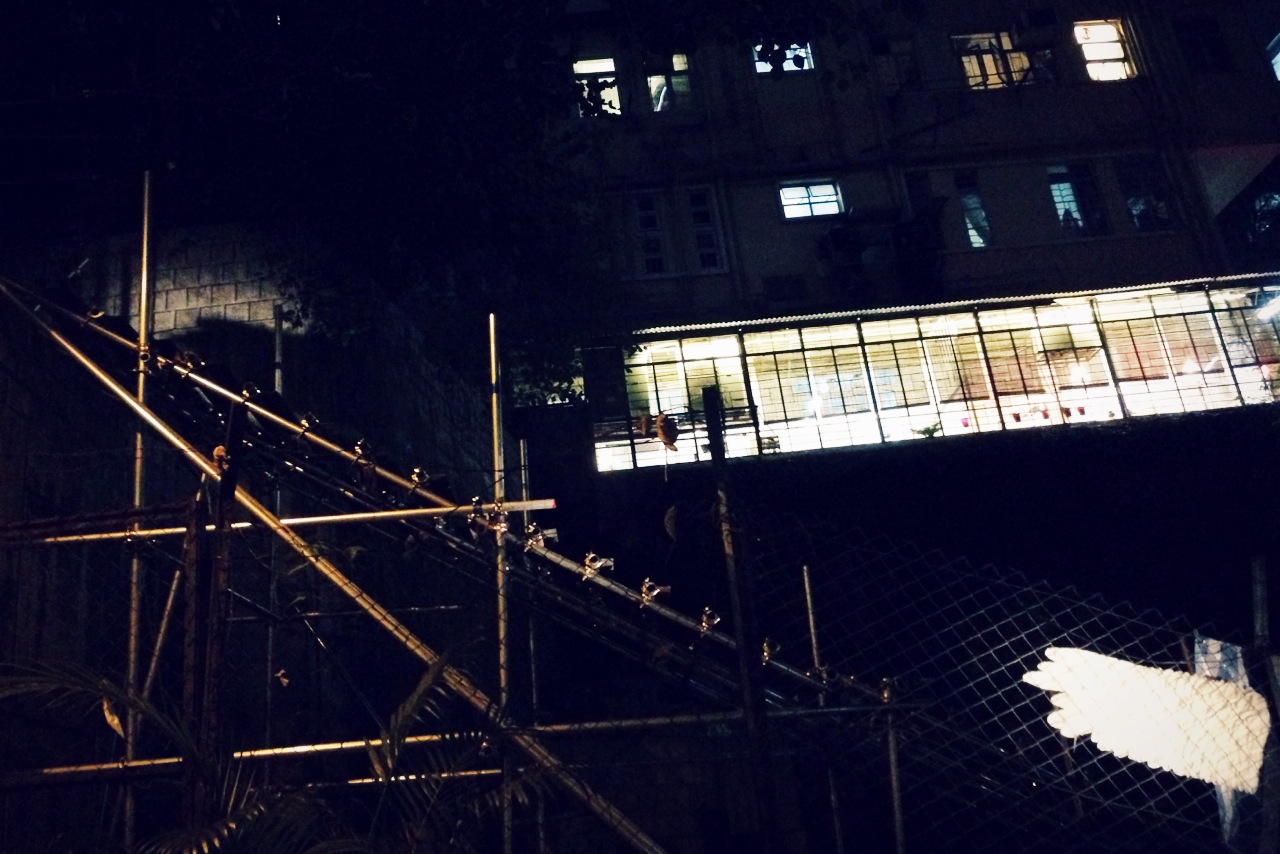
其二、在地是次展覽的「在地」性,藝術家強調這是他創作中一直關注的層面,當作品一旦被移離現場,它於場地上所建構的一種關係便消失,所指向的意義也不在了。去理解今次展覽的「在地」性就是去理解藝術家與適安街的關係是什麼一回事?相信與一個「情」字有關。這個展覽的開端也是藝術家對此地有「情」而起,雖現已搬離這條他曾生活過八年的小街,但藝術家與附近的街坊舖主和鄰里素有交情,因此,他們對藝術家的「在地」創作要求都十分支持,藝術家更可以在街頭的牆壁大筆大筆的畫,有的舖主更讓出舖面的櫥窗展示作品《窗外什麼也沒有嗎?》;一幅由七個不同城市的高空俯瞰影像併合而成的巨型窗簾,藝術家利用「在地」的創作手法(當年的適安街曾有過窗簾工場)連結這地的歷史、神話故事的 寓意和城市發展的反省。這種「在地」的合作關係體現出「人情」,也接近「老者安之,少者懷之」的社會理想。
其三、與美學無關
作品《還要繼續嗎?》有如現今社會發展的動作般;一雙鐵製的涼鞋在一方泥土上瘋狂地踐踏,這片泥土最後被踏至模糊一片,不管最初的山水如何。生活於都市之中的藝術家,為什麼要用藝術創作去討論社會發展的問題?不是有很多其他更直接的方法嗎?是的,要單單說明問題所在,我想沒有用文字語言這種工具更直達。不過藝術家的天性就有先行者的觸覺,他(她)們藉由潛意識的凝聚實現(啓發)改變生活的動力,藝術創作就是實踐腦海內無邊際意念的行動。
試著閱讀鄭志明的作品同時,沿著他的意念思考﹣我們需要認識到自身所處的情勢及局限,便可能反思我們現正面對的危機和問題,發現更多人類生存的方向。
不要浪費普羅米修斯為人類盗火(工具/技術/希望)的心意。
Legends along Sik On Street
Text by Yu Kei Kei
Translation by Jackson Choi
Legends carry ethical meaning and are narratives of vigilance. Stories selected for this exhibition are mostly taken from Greek Mythology. When explaining the Greek view of humanity in his article Views of Mankind, Lin Yutang humorously stated that the Greeks made their gods like men. “That Olympian company is certainly a jovial, amorous, loving, lying, quarrelling and vow-breaking, petulant lot; … and a marrying lot, too, and having unbelievably many illegitimate children.. . They (the Greeks) took human nature largely as it was.”
The opus on display emerged from the myths in the background where the title of each exhibit forms a question. The artist’s intention is to raise questions through myths about the development of this city. Let’s attempt to read the works of the exhibition “Legends”and the background from which they arise.
I. Tools
A number of exhibits were constituted of ready-made tools, such as woks, axes and chains. We are not aware of the existence of these everyday tools when we are using them, just like we are not aware of the presence of language when we are using it to communicate. Everyday tools are, by nature, concealed. Sometime ago I came across an article on Chinese National Geography. Without these tools, according to the author, many classic landscape poems would not have been written. Without boats, it would be unthinkable how Li Bai could gently float down theYangtze River while reciting his famous lines about incessant cry of monkeys coming from the river banks as his boat was passing countless hills. In the article, Professor Wu Guosheng of Peking University said this about tools (technologies)–they are both the media for humanity’s construction of self and that for constructing the world. Tools are neutral. Using tools (technologies) in the process of becoming and how to be is what it means to be human. This is how human nature comes to be. This “to be” points to the exercise of the will or logic. Production is humanity’s way of expressing their worthiness to their families and society. When the artist’s understanding of these tools materializes, a new meaning (logic) extends from his imagination. The exhibits “Is it to be Continued?” and “Can’t this be Terminated?” strip off the concealing nature of tools, allowing the audience to pause and rediscover their existence and ponder with the artist the kind of world we are creating with tools. Externally, mankind exploits all possible means to conquer nature, while internally make the best of life by tapping into all our strengths. When tools were not as powerful as they are now, mankind was more willing to look up to the starry sky instead of looking down at the ground.
II. Site-Specific
Being site-specific is the artist’s concern during the process of creating the works for this exhibition. If the exhibits are removed from the locale, the relationships formed with it, together with its meaning, will vanish. To understand the site-specific nature of this exhibition is to understand the relationship between the artist and Sik On Street—affection. The beginning of the exhibition is the artist’s affection toward this place. Having moved away from this little street where he lived for eight years, the artist has maintained a cordial relationship with neighbours and proprietors who back the artist’s on-site creative activities. The artist is given free rein to paint as he pleases on the street walls. Some shop owners even gave up shop window space to display the piece “Is there Nothing Outside the Window?”, a giant window blind made up of seven aerial shots of various cities. The artist uses this site-specific approach to connect the history of this locale (Sik On Street housed a window blinds workshop at one point), the moral message of myths and the reflection on urban development. This site-specific cooperation is the realization of human bonding which comes close to the (Confucian) social ideals of “giving rest to the aged and tenderness to the young.”
III. Aesthetics is irrelevant
The work “Is it to be Continued?” simulates the manner modern society is developing—a pair of iron sandals trampling madly on the soil until the original landscape has been reduced to a pulp. But why is an urban artist resorting to discuss the issue of social development through art? Are there not more direct ways? Surely, nothing can be more straightforward than words for a simple explanation of the issue. Nevertheless, the artist’s innate sense and sensitivity as a pioneer enables him to channel the subconscious into a life changing force. Artistic creation is an act of realizing the boundless ideas of the mind. Trying to read the works of Carl Cheng’s while following along with his thoughts requires an awareness of our own situation and limitation, which may in turn help us to reflect on the threats and issues we are facing, and to discover more ways for humanity to survive.
Do not squander the fire (tools/techniques/hope) Prometheus stole for mankind.
 野.遊
野.遊 